


There’s a common misconception that building wealth is only for those with million dollar businesses, a portfolio of rental properties, or those who earn over a six figure salary. However, that couldn’t be farther from the truth! It is absolutely possible to build wealth with a small income – and we’re going to show you how.
How many times have you heard stories of lottery winners losing it all, or famous athletes with multi-million dollar salaries filing for bankruptcy? If building long term wealth was all about income, these stories wouldn’t exist. Accumulating wealth has more to do with simple money management skills, not necessarily how much you start out with.
For example, someone with a $200,000 salary could be living paycheck to paycheck. And someone with a $50,000 income could be investing 20% of their take home pay every two weeks and find themselves on track to retiring early.
While having a small income might come with more challenges, it’s still entirely possible to live frugally and build wealth. Plus, the creativity you gain from living on a smaller salary can help you for decades to come!
Whether you make $35,000 each year or $100,000, I believe that everyone has the ability to grow their wealth in a meaningful way if they put their minds to it. You just need to spend time learning about personal finance and adopting some easy frugal habits. And making those moves sooner rather than later will help you start funding that much more comfortable future.

1. First, Change Your Mindset
If you want to build wealth with a small income, you need to BELIEVE that it is possible. Many folks deep down think they are not worthy, or they don’t have the smarts or opportunities to succeed. If this is you, let’s change that mindset!
The quickest way to eradicate negative thinking is to stop comparing yourself to others who are in different situations. There’s an old saying… “if everyone threw their troubles into a pile in the middle of the room, you’d go in and take your own problems back.”
Even though this is a personal finance blog, it’s important to note that money is not everything. And just because someone earns more than you doesn’t necessarily mean they are in a better position.
It really could be a good idea to go through your social media and unfollow (or mute posts from) anyone who makes you feel inadequate or jealous. Social media often shows the highlights reel of someone else’s life, and it makes it very difficult to know what’s really going on behind the scenes.
For example, you might see some reels from a coworker who just completely renovated their kitchen. What you might not see though is the amount of debt acquired to make it happen!
Instead of focusing on what you’re lacking, get excited about the things you have at your disposal. Get inspired by stories of other folks just like you who build wealth with a small income, and show you the actions they are taking.
Examples of Folks Who Built Fortunes with Small Incomes:
Check out this mobile home park caretaker named Geoffrey Holt. He was a secret multi-millionaire, despite never earning much money. Geoff’s frugal habits allowed him to build a huge amount of wealth over time, eventually leaving a 3.8 million dollar estate to his hometown to be used in ways to benefit the community.
Another great story – Theodore Johnson, the UPS worker who died with 70 million dollars. This frugal legend never made more than $14,000 in a single year! Mr. Johnson invested “early and often” which was the primary force in building his massive nest egg.
A more modern-day and relatable frugal hero is Sarah Wilson, Aka Budget Girl. Sarah lives in a small town in Texas, has a small single income and is building wealth slowly over time. She posts all her income, expenses, and budgeting tips on YouTube for anyone to follow.
There are thousands of folks out there with inspiring stories. Follow them, chat with them, and try their ideas!
2. Learn the Difference Between Saving vs. Investing
In order to build wealth with any degree of income, you need to understand the difference between saving and investing money.
While both are important, they serve two entirely different purposes. Just saving money isn’t enough – you need to invest if you want to build wealth.
Essentially, saving money means protecting it for a specific savings goal. Any money that isn’t needed for spending or to cover potential emergencies should be invested, to grow over time.
For example, you’ll want to save your money for things like an emergency fund, a car, weddings, a home down payment, or any other sinking fund goals. However, beyond saving for specific goals, you want to make sure you don’t hold on to too much cash. Here’s why:
Inflation erodes cash…
It is nearly impossible to save your way to retirement. This is because inflation eats away at your savings every year.
The only way to combat this is by investing your money, and earning interest on your investments.
Think about it this way: If you have $100 in your savings account, and inflation rises by 3% in a year, that $100 now has the buying power of just $97.
While that may not seem like a big deal over the course of one year, this can have a massive impact on your money compounded over years or decades. If inflation averages at 3%, your buying power will be cut in half in just 23 years!
Luckily, the same forces working against you with inflation work for you with investing. Compound interest can help your net worth skyrocket over a long period of time if your money is invested.
The stock market is a great place to invest long term (we’ll get into specific account types below). Since the S&P 500 has returned an average of 10% over the last 100 years, investing in highly diversified index funds is a great way to hedge against inflation.
However, it’s important to mention that this is the average return- meaning that market returns can fluctuate greatly from year to year. While there is always risk involved when it comes to investing your money, you can mitigate that risk by adopting a long term investing strategy, and resolving to keep your money invested for longer.

You Can’t Save Your Way to Retirement
The greatest force you can have at your back when building wealth on a small income is compound interest. Compound interest is what happens when the interest you make on your initial investment starts to earn interest itself. This helps your retirement nest egg to build grow at a faster rate as the years go on. It’s the secret sauce behind wealth building.
Here’s a quick example:
Let’s say you’re 20 years old and make $40,000 each year after taxes. After your expenses, you’re left with about $400 to save or invest each month. If you were to save that $400 each month for 45 years in a savings account, you would have a total of $216,000 to retire with.
However, if you invested that money instead each month, you could retire with $3,606,180 assuming a 10% average return on investment. That’s over 10 times what you would be able to save in plain old cash.
Learning to invest is mandatory if you want to build wealth on a small income. Luckily, it’s not as daunting as it all seems, and we’ve even written a lengthy post about investing for beginners!
Now that you understand the differences between saving and investing, we’re going to talk about one particular savings goal that you should meet before you start investing…
3. Build An Emergency Fund
We’ve all been there before. You’re totally managing your expenses, and maybe even saving money in the process… And then before you know it- boom, your car breaks down. Or maybe you get sick and need to go to the ER.
Now you’re faced with a thousand dollar expense you didn’t expect, and need to take money out of your savings account, or worse… take on debt to cover those costs!
Unexpected costs suck, and there’s never a “good time” to experience an emergency. But luckily, there’s a way to make them less stressful when they occur. Creating an emergency fund can protect you from going into debt or dipping into other savings when shmutz hits the fan.
Plus, you’ll enjoy more peace of mind in your daily life knowing that you’ll be able to weather whatever life throws your way.
While ultimately you should aim to save up around 3-6 months worth of your expenses to fully fund your emergency fund, saving up just $2,467 can help you to cover most surprises, according to economists.
Pro Tip- Don’t stash your emergency savings in just any regular bank. Pointless fees can eat away at your money, and you won’t be earning enough interest to outpace inflation. Instead, open up an account with a High Yield Savings Account, or HYSA. This will allow you to earn up to 10x the national average in interest, and do away with some of the heinous fees that the big banks often charge you!
4. Start Investing ASAP
If you want to build wealth on a small income, TIME will be your biggest advantage. Saving $1 now can be more powerful than saving $100 later. Seriously.
The earlier you get started and the longer your time horizon, the less money you will need to actually save each month to retire comfortably.
Here’s an example: If you start investing when you’re 20, and your goal is to have around $2 million in retirement, you’ll need to invest approximately $432 per month. However, if you wait until age 40, you’ll need to invest about $2,280 each month to retire with the same amount of money!

No matter your age, you need to prioritize investing now. I know, it can be hard to save a few hundred dollars a month with a small income. But I promise you it’s easier than saving a few thousand a month later when playing catch up.
Best Accounts to Start Investing With
If you want to get started investing, we always recommend starting with one of the tax advantaged accounts available to you. These can provide significant tax benefits that help lower your taxes either now or later down the road.
401(k) Plans
If your employer offers a 401(k), you’ll likely want to take advantage of that investment account first. Especially if they offer an employer match! An employer match is essentially free money that your employer will contribute on your behalf towards your retirement.
If you neglect contributing to your 401(k) with an employer match, you are committing a cardinal investing sin. You’re leaving money on the table, and since we’re working with a low income, every penny counts!
You can contribute up to $23,000 annually into your 401(k). Plus, contributing to a 401(k) can even help you to save money now. Because this account is tax advantaged, those contributions you make will decrease your taxable income! Then, when you withdraw your funds in retirement, you’ll pay taxes on your withdrawals.
If you don’t have a 401k –> Consider asking your boss or business owner to set one up! Human Interest is an awesome fintech service provider that helps businesses set up easy and affordable retirement plans for their employees. It never hurts to ask!
Company sponsored retirement plans are a win/win for you, and your employer, because you’ll likely stay there longer if they offer these killer benefits!
Roth IRA
Not everyone has access to a 401(k). If you fall into this category, you can start by contributing to a Roth IRA.
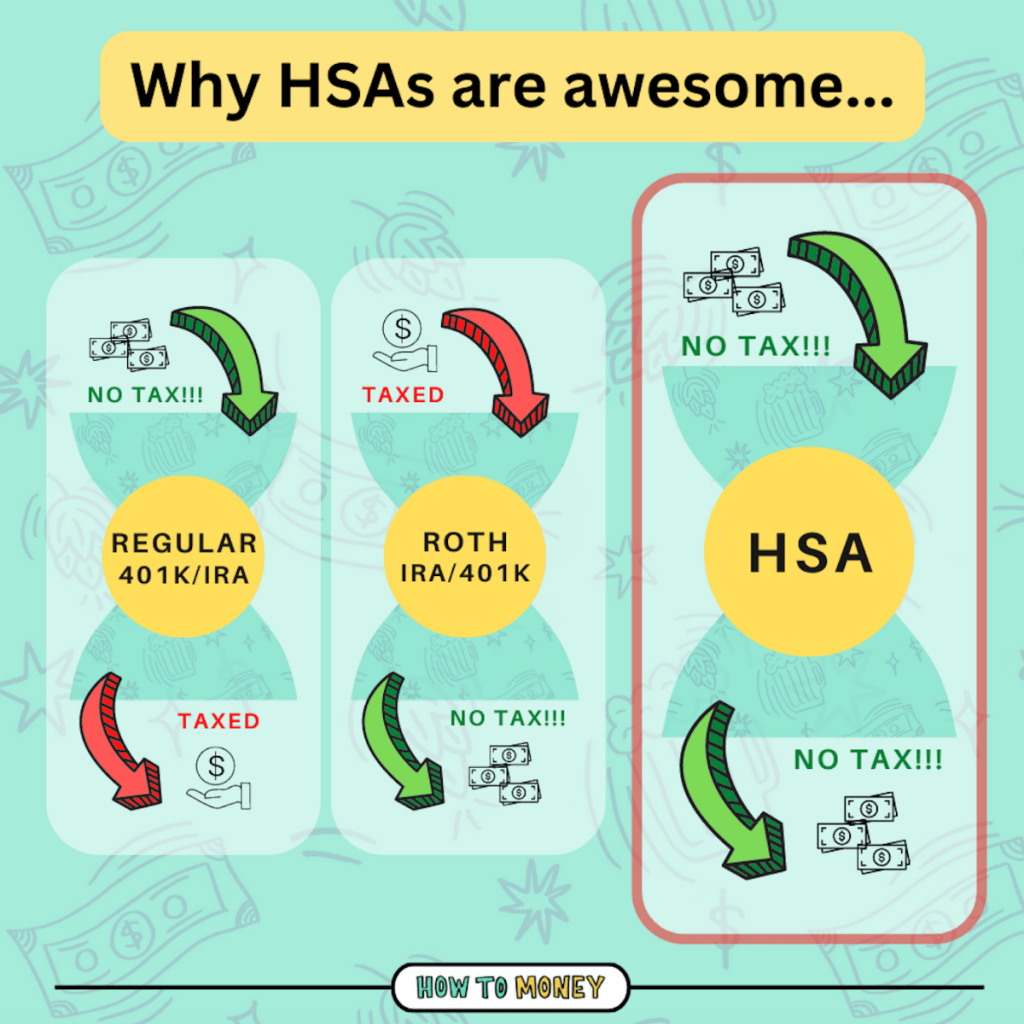
Roth IRAs are awesome investment accounts, because you contribute with dollars you’ve already paid tax on. Then, when you withdraw your funds in retirement, you won’t pay any tax on them.
You can contribute up to $7,000 into a Roth IRA each year (2024 limits), but if you’re over 50 years old you can take advantage of something called “catch up contributions.” This means that you can contribute an extra $1,000 each year to your Roth IRA to make up for lost time.
Pay Yourself First
Although it might be tempting to wait until the end of the month and just save whatever is left, there is a smarter way to save more and improve your financial future. When it comes to saving and investing, we highly recommend “paying yourself first.”
This means that as soon as you get paid for the month, contribute money to your retirement accounts right away. Think of retirement investments and savings goals as bills that must be paid at the first of every month.
If you make transfers before paying all of your other bills and before your discretionary spending, you’ll find a way to live off of whatever is left in your accounts after your contributions.
Waiting until the end of the month to save is a mistake. If you don’t prioritize savings and investing it’s more likely that you’ll have less money left over to contribute. Instead of just saving the “scraps” for yourself, prioritize your financial future. We want to see you take care of these crucial tasks at the beginning of each pay period.
Small Amounts Add Up
It’s easy to think, “there’s no point in saving or investing right now because I can only spare a few dollars”. But if you’re trying to build wealth with a small income, every dollar counts. When you start contributing can sometimes be even more important than how much you invest.
For example, let’s say you can only contribute $50 each month between the ages of 18 to 28. Then, you switch jobs at age 28 and are able to contribute $400 each month after that. You’ll be able to retire at age 65 with $1,165,299! (this assumes an 8% annual return on investments).
But if you waited until you were 28 to start investing, you’ll only have $1,009,981. Those seemingly paltry $50 per month contributions make a difference to the tune of over $150,000 by the time you reach retirement!
That’s why it’s so important to start contributing now, even if it’s only a tiny amount. Those few dollars here and there can add up to thousands in retirement.
5. Increase Your Savings Rate
No matter your income, the only way to build wealth is to spend less than you earn, and invest the difference each month. If you are spending more than you make, you’ll never be able to increase your net worth.
While it’s certainly more difficult on a small income, it is possible to slim down your expenses to ensure you maintain a healthy savings rate. If you can, aim to save between 15-20% of your post tax income each month. Put this money towards things like debt payments, retirement contributions, or just plain old savings!
Here’s what a 15% savings rate looks like for various income bands. This assumes 40 working years, and an investment growth rate of 8%…
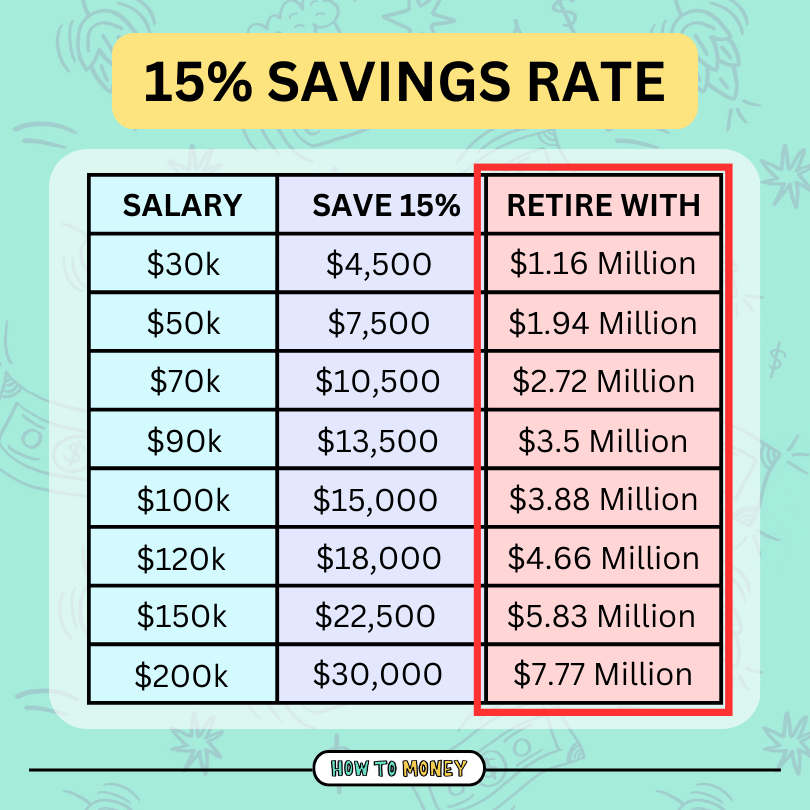
As you can see, it’s entirely possible to build massive wealth with a small income.
If you aren’t able to save that much of your income yet, don’t worry. There are plenty of steps you can take to help increase your savings rate. Remember that every percent counts and can make a sizable difference over time.
Make a Budget
One of the reasons why most people aren’t able to save is because they consistently underestimate their expenses. And the best way to stay on top of (and hopefully slash some of) your expenses is to start budgeting.
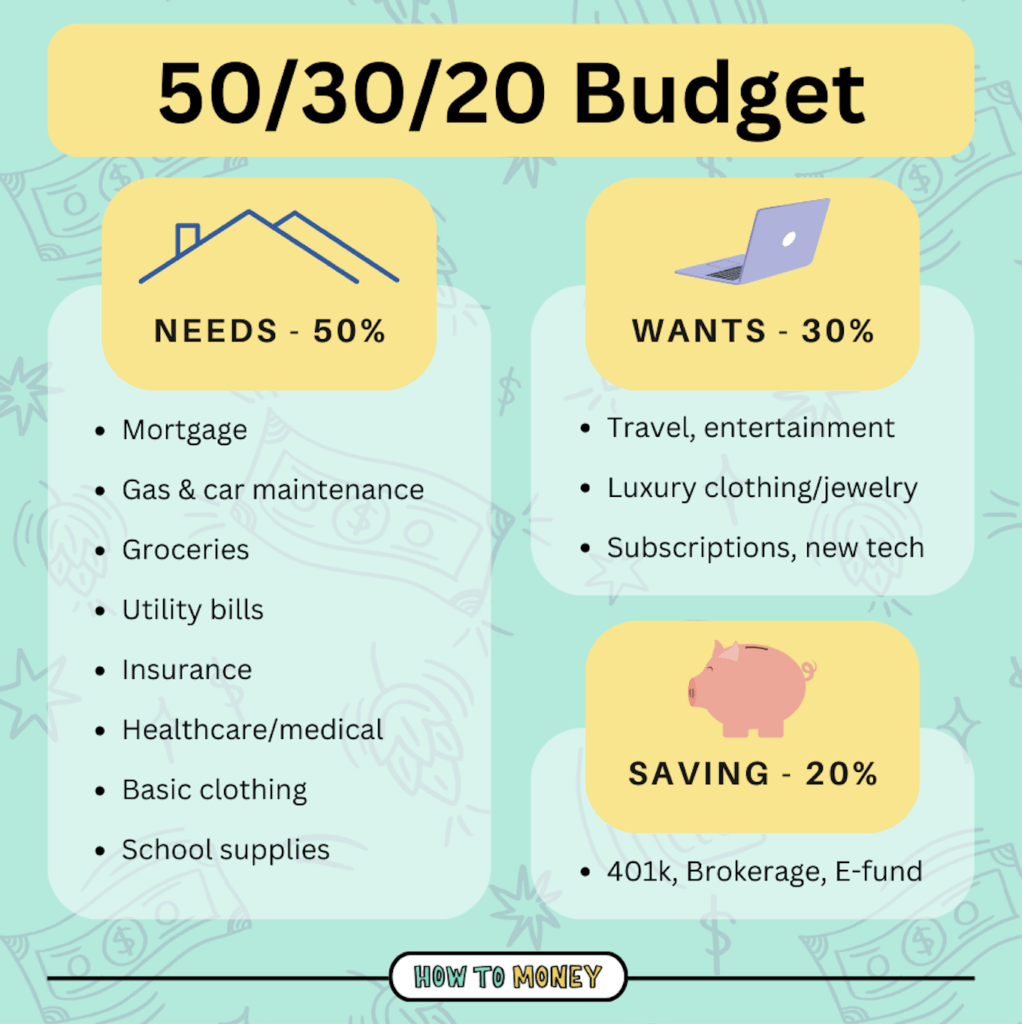
If you’re working with a smaller income, it may be helpful to start by using the 50/30/20 budgeting method. Under this budgeting technique, you’ll allocate 50% of your income to needs, 30% towards wants, and 20% towards savings, including investing, saving and paying off debt.
Budgeting is also a great way to start tracking your expenses. It’s nearly impossible to manage your money well if you don’t know where it’s going. When you track your expenses, you’ll be able to see which categories you’re spending the most on. Sometimes, this knowledge can help you to cut back on purchases that don’t necessarily make you happier.
Negotiate Your Bills
An easy way to free up more money for investing it to start negotiating your bills. Unfortunately, most of our service providers don’t reward us for being long-term customers.
Instead, they penalize us by raising prices for our services without offering us anything in return. That’s why it is so important to advocate for yourself by calling up and asking for a discount.
Set a date this month on which you will spend an afternoon calling companies like your cable, internet, phone and insurance providers, and ask them if there are any new customer offers you can take advantage of. If the customer service representative on the phone says they can’t help you, ask to speak to the customer retention department.
Now here’s the thing. If you call to negotiate your bills, you need to be willing to walk away and switch providers if they deny your requests. Although it might seem like a major pain, it’s usually less of an inconvenience than you might think.
And the savings can be significant. For example, switching from a major phone company to one of these budget MVNOs can save you hundreds of dollars each year that you can use to bolster your savings.
Cancel Subscriptions
Now let me preface this by saying we are NOT one of those blogs that are going to tell you that you can’t afford a Netflix subscription until you are maxing out your 401(k).
Sometimes, subscriptions can add value to our lives. For example, if you watch Netflix every weekend with your partner instead of going to the movie theater, you can save a lot of money. The problem really comes when we keep paying for subscriptions that we are not using consistently.
To put it in perspective, the average consumer spends $219 on subscriptions each month. Again, while we aren’t totally against subscriptions, it can be very wasteful if you are paying for services you don’t use often.
Instead, we propose you change the way you think about subscriptions. Instead of paying for them consistently, sign up for them when you actually plan on using them. For example, if a new season of your favorite show drops on Hulu, subscribe, watch the show, and then cancel it until another show you’d like to watch premieres.
Limiting your subscriptions to 2-3 at a given time can help you to save hundreds every single year. Make sure to schedule a subscription audit every few months to keep track of those sneaky subscriptions that may be draining your bank account.
Change Your Lifestyle
Lastly, if you really want to make dramatic cuts to your budget, you can make a few bigger lifestyle changes. For example, you could save approximately $9,282 each year by ditching one of your family cars. Or you could make extra money by renting out a room in your home.
While not everyone can make major changes at the drop of a hat, it’s worth noting that these bigger moves will have the most significant impact on your ability to build wealth.
Pro tip: Here is our master list of frugal hacks! Try some out this month and see what works for your lifestyle.
Work Towards Earning More
Lastly, if you’re working with a small income, there are steps you can take to maximize that income. Every small bump in pay can free up funds to grow your wealth. Even switching jobs to earn 10% more can make a huge impact on your bottom line.
For example, if you currently earn $35,000 each year and switch jobs to snag a 10% raise, you’ll earn an extra $3,500 that year before taxes. Even just saving half of that each year and investing it into a Roth IRA can mean having an extra $453,000 at retirement if you let it stay invested for forty years.
If you’d like to try and earn more money, consider asking for a raise, switching jobs to snag a more significant pay bump, or starting a side hustle. You could also consider switching industries to earn more, or furthering your education to make more progress in your career.

6. Avoid These Wealth Killers
Now that you’re earning a bit more and spending less, you’ll need to protect those savings by avoiding these wealth killers at any cost.
High Interest Debt
Remember how we mentioned that compound interest is the powerful force that can help your investments to skyrocket? Well, that same powerful force can also work against you when it comes to high interest debt.
High interest rates are what make it so difficult to get out from under the thumb of certain types of debt, like credit card debt, personal loans, and payday loans. That’s why it is so important that you pay off these debts as quickly as you possibly can. And avoid them altogether in the future.
If you want to build wealth on a small income, but you’re still carrying around high interest rate debt, be sure to create a debt payoff plan. And stick to it!
If you’re drowning in debt: consider reaching out to a non-profit counseling organization like Money Management International. They are free, they are helpful, and they can help save your financial life.
Cars are a Money Pit
We know that many people do need cars to get from point A to point B. We’re not here to tell you that all driving is bad. But you need to understand the truth about car ownership, including all the hidden costs!
Did you know, the average monthly car payment for a new car is $725 each month!?!? That can put a HUGE dent in your budget every single month for years on end. If you can find ways to reduce your car expenses, you can put all those dollars into wealth building instead!
The truth is, you don’t need a fancy new car with all the bells and whistles. Especially if you’re trying to grow your wealth on a low income.
There are tons of affordable and reliable used cars that you can find out there for under $10,000. Consider these instead of springing for something new. Plus, I find that when you purchase a used car, you’re less likely to stress about small dings, dents and scratches. Win-win!
We encourage you to look for meaningful ways to reduce your transportation expenses. Whether that’s by walking to run a few errands each week, selling a more expensive car for a more affordable one, or ditching one of your cars altogether!
Living without a car isn’t really that hard if you live in a walkable suburb or work from home.
Big Homes Slow Financial Progress
While home ownership can be a smart investment for many, it’s not always the wisest financial choice. You’ll want to be extra cautious when choosing your housing if you’re working with a small income. Buying a home might stretch you too much financially, leading you to become house poor.
Many homebuyers forget to factor in the hefty costs of home maintenance. This can put a major strain on your finances if you aren’t prepared.
If you do want to buy a home, a great way to achieve that goal is by house hacking! A house hack is when you buy a home to live in, and then rent out a portion of it to help reduce mortgage costs. You get to enjoy the benefits of homeownership, while saving more for the future.
Related: Pros and cons of renting vs buying a home. (this guide goes way beyond numbers, but in general, it’s cheaper to rent instead of buy currently across most of the US)
Risky Investing
There’s a right way to invest, and a wrong way. If you’re trying to build wealth on a small income, you need to protect your little flame as much as possible. Risking it all by stock picking or gambling with crypto is a sure way to lose all your money.
Stock pickers seldom outperform the S&P 500, which is one of the most famous and basic index funds. It’s made up of the top 500 performing companies. In fact, out of $2,132 actively managed funds (groups of professional stock-pickers) the New York Times just reported that not a single one of them beat their index benchmark!
If professionals on Wall Street can’t do it, I promise you won’t be able to do it either. Luckily, there’s an easier way to invest that will guarantee your fair share of growth in the stock market. This is by investing in broad, low cost index funds.
When you invest within your 401(k) or IRA, make sure to invest it in low-cost index funds. These are made up of tons of individual companies, so you’re spreading all your wealth across multiple baskets.
Sure, some of them will totally flop, causing you to lose money. But but others (most) will be extremely successful, and you’ll reap the benefits of that.
Need more guidance on how to start investing? Be sure to check out our beginner’s guide here!
Inflation
As we mentioned before, inflation can have a huge impact on your buying power year over year. That’s why you need to make moves to hedge against inflation. While you may be more comfortable having more cash on hand, it’s important not to hold on to too much cash.
Remember, that in order to build wealth on a smaller income, you’ll need help from your sidekick, compound interest. Otherwise, inflation will eat at your savings and diminish your buying power.
Be sure to invest any savings beyond your emergency fund and short term savings goals, like a home down payment or car.
7. Use Tax Advantaged Accounts
We covered some of these earlier, but we can’t understate the importance of tax advantaged accounts. (Here are the ones you’ll want to prioritize if you don’t have access to a 401k). They were created to help people with smaller incomes, because the majority of Americans need more motivation to save for retirement.
If you want to invest more money in the now, investing in a 401(k) or Traditional IRA can help you to lower your upfront taxable income. Meaning, you’ll have more money available to invest now because less of your income will fall into the hands of the government.
Deferring taxes helps your money compound more quickly, growing faster over time. Just remember that when you withdraw this money in retirement, you’ll have to pay taxes since you deferred tax when you contributed that cash.
However, if you have a low income and are in the 10% or 12% tax bracket, you may want to stick with a Roth IRA. This means you will pay tax on that income now, but you’ll be able to withdraw it in retirement entirely tax free. Because we assume that you’ll be in a lower tax bracket now than in retirement, you could save money overall when it comes to taxes.
Another awesome account is the Health Savings Account (or HSA). This one has a triple tax advantage! Contributions are tax deductible upfront, and there is no tax when you withdraw the funds later for qualified health expenses.
Here’s a quick visual overview of taxes in and out of these retirement accounts:
If you have a really low income, you may want to check and see if you qualify for the Savers Tax Credit. If you contribute to your retirement accounts, the government might reduce your taxes in a meaningful way for investing!
8. Automate Everything
If you really want to accelerate your wealth building progress, it’s a good idea to automate your finances. This removes the need to physically do things like move money to savings and make contributions to your investment accounts. Out of sight, out of mind!
After you’ve tackled all the low hanging financial fruit, automation is the next step. The goal is to ingrain wealth building habits into your routine, so it’s one less thing you have to stress about.
We want finances to take up less mental space as you go about your daily life. Saving for your future and building wealth will become second nature, as long as you put in the hard work upfront and build the consistency.
A cool tool you might consider using is an app called Empower (used to be Personal Capital). This app connects to all your bank accounts and investment firms and helps chart your financial growth over time.
Checking in every now and then to look at your overall financial picture helps confirm if things are on track. Sometimes you’ll need to step in and make adjustments!
9. Beware of Lifestyle Creep
While you may have a small income right now, there’s a good chance that one day your income may not be so small anymore. As your income increases, it’s important that you don’t fall victim to lifestyle creep.
Lifestyle creep is a way to describe the phenomenon of spending more as you earn more. In other words, as your income increases, your expenses often rise to meet it.
For example, if someone gets a $5,000 pay raise, they might think it’s OK to spend $5,000 on a vacation that year. Nothing lost or gained, right?
Well…. the truth is, after taxes, that vacation just put them in the negative. And, they may grow accustomed to spending that same money and taking equally great vacations every year for the rest of their lives.
But lifestyle creep doesn’t only apply to a raise in your income. Sometimes consumers are likely to start spending more even if their income and expenses remain the same because as their wealth increases and their portfolio grows, they feel more financially secure. This is often referred to as the “Wealth Effect.”
To combat all this, make sure you continue to track your expenses, and take notice of any consecutive months where there is increased spending. It’s OK to spend a little more as your income increases, just make sure you’re saving more, too!
The ultimate win is increasing your income AND keeping your expenses in check. This is what will help you build wealth at an accelerated pace.
The Bottom Line
While lots of traditional financial advice caters to average or high earners, let us be the ones to tell you that you do not need to pull in six figures each year to grow substantial wealth. Money management is far more important than how many zeros are on someone’s paycheck.
By incorporating frugal habits into your daily routine, spending less than you earn and investing the difference, you can build wealth on a small income. Just remember that time, consistency, and compounding returns are your best allies.
Related Posts:


Excelente
Great! Thank you!
This blog was very informative, this was my first one I have ever finished reading regarding finances. Well written and relatable.
Packed with information a person can understand.
This information opened my eyes and mind of the possibilities of having a substantial amount of wealth when I’m older.
I’m well over 40 and have been thinking of investing. This blog has convince me to start, ASAP.
Ow great, thank u