

Picture this: you’re mindlessly scrolling through Instagram one night when suddenly a post from your old high school buddy pops up. They’re grinning ear to ear, flaunting screenshots of their crypto wallet showing a small fortune – all from a lucky bet on some random cryptocurrency you’ve never heard of.
Your heart sinks as you think about your own boring (and neglected) investment accounts. Before you know it, you’re hit with a wave of financial FOMO – Fear of Missing Out. It’s a scary feeling that everyone else around you is getting rich, while you’re going to be stuck living paycheck to paycheck forever.
Then a small intrusive thought pops into your head… Maybe it’s time you start betting your life savings on crypto, too?
The Financial Impact of FOMO
Simply put, FOMO makes you do stuff you usually wouldn’t do in your right mind. It urges you to act impulsively and emotionally – which is probably the worst way to make money decisions.
Here are few ways FOMO can totally wreck your financial life:
Impulse Purchasing
Probably the biggest financial impact of FOMO is veering away from common sense spending and instead making impulse purchases. Sometimes these are small things (buying that $65 special edition Stanley Cup to flaunt at Yoga class), and sometimes they are big things (buying a fancy $2,000 drone that you don’t need).
Sporadic impulse purchases aren’t too horrible. But if you begin making a habit of mindless spending, these decisions can quickly add up and can derail your finances. The desire to fit in or not miss out on what everyone else seems to be enjoying can lead to spending beyond your means and buying crap that you will almost certainly regret later.
Debt Accumulation
Studies show that FOMO-fueled debt is a rising concern, particularly among millennials. The pressure to keep up with others is expensive!
And we’re not talking about “good debt” like mortgages or student loans. We’re talking about consumer debt like credit cards or expensive car loans. Noooooo! 😭 High interest debt is a total wealth killer!
The reason many people resort to credit cards is because they’re not thinking about the long term costs. It’s all about wanting something now, and dealing with the money stuff later. Sadly, high interest debt has a cascading effect, like steadily digging yourself deeper and deeper into a hole.
Neglecting Savings and Investments
The more money you spend today on stuff that doesn’t really matter, the less you have to funnel into long term savings accounts that DO MATTER.
When FOMO takes over, long-term money goals like building your retirement nest egg or saving for a house down payment take a backseat. The immediate gratification of fun experiences or consumer goods can overshadow the importance of building wealth.
The Emotional Toll
Beyond screwing up your financial progress, FOMO can also build up an unhealthy amount of anxiety and stress. Constantly comparing yourself with the seemingly perfect lives of others can create a sense of inadequacy and dissatisfaction.
This worsens the spending problems, and balloons financial stress. It’s a vicious cycle. 🤕
Strategies to Combat FOMO
OK, you get the point. FOMO is not just a fun buzzword – it can have serious financial consequences.
So, how can you recognize that FOMO is rearing it’s ugly head in your life and avoid making dumb money decisions?
Here are some practical tips and examples to help combat FOMO and stay in control of your financial situation.
1. Set Clear Financial Goals
Yeah, I know, setting goals sounds boring doesn’t it… But honestly this single act can completely change your financial life.
Goal setting essentially brings in a higher power to your life, overriding the ugly feelings of FOMO. With very specific goals in mind, it’s far easier to resist the temptation of spontaneous spending because you’re hungrier for bigger and more important stuff!
For example: A friend of mine recently set a goal of building a $10k emergency fund. He printed out a progress chart and stuck it on his fridge to remind him every day that this is his most important goal right now…
Then last week, I called to invite him out drinking with me and some friends. Guess what his response was!?… “Ah, thanks for the offer. But honestly I’m going to sit this one out because I’m saving all my cash to hit my $10k goal. Have fun, I’ll catch you another time.”
Having both short-term and long-term money goals (and constantly reminding yourself of them) encourages you to make smarter money choices. 💪
2. Create and Stick to a Budget
After making goals → the next step is making a plan to achieve those goals. Aka, making a budget. Don’t let that word freak you out!
Budgets are your best defense against FOMO-induced spending because they force you to spend more intentionally, not mindlessly. This means directing your dollars towards specific spending buckets, vs. buying things willy-nilly and not knowing where all the money went at the end of the month.
If you’re new to budgeting, first learn how to track your income and expenses. Use a free budgeting app like Empower, or a cheap all-in-one app like YNAB.
Remember, a budget isn’t about restriction – it’s about making intentional choices. It’s your budget, so you get to decide where your money goes and what cool things to make room for. So make it personal, and make it fun! 🤩 Just make sure you’re setting aside at least 15-20% from each paycheck for retirement investing.
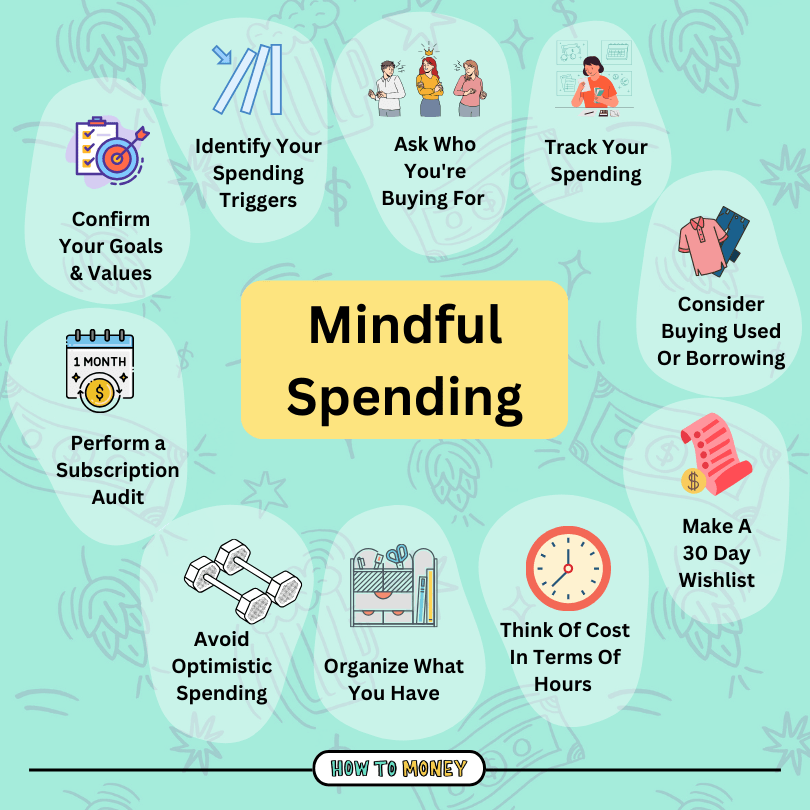
3. Practice Mindful Spending
Mindful spending is basically thinking twice before making purchases.
Before swiping your credit card, ask yourself if whatever you’re going to buy is truly aligned with your budget and your long term financial goals. That quick 10-20 seconds of reflection on whatever you’re about to purchase can help avoid buying things solely driven by FOMO.
Here are some other ways to practice mindful spending and reduce impulse buys…
4. Limit Social Media
Spending too much time on Social media can be a major trigger for FOMO.
First, think about setting some boundaries on your daily usage. You can monitor this (or even lock yourself out of certain apps) in the settings on your cell phone.
Next, try curating your feeds and slimming down the amount of unhealthy influencers you follow. There’s a proven “influencer effect” in which consumers are heavily swayed in purchasing decisions by the people they follow on social media. By following fewer folks, you have more control over what you buy vs. others.
Lastly, it’s not just influencers that subconsciously push you to spend more. Sometimes your flashy friends and family stoke feelings of FOMO. Remember that most cool things you see online are usually “the highlight reel”, and only show the good bits of people’s lives.
5. Embrace JOMO
JOMO (Joy of Missing Out) is the opposite of FOMO. It’s the feeling of blissful satisfaction from being content with what you have, vs. feeling envy for the things you don’t have.
How do you find contentment? → Start by practicing daily appreciation. Focus on experiences, relationships and the simple possessions you already own that naturally make you happy. Remind yourself how lucky you are to have what you have, and know what you know.
Rather than looking outward and seeking external validation through material possessions, look inwards and work on finding peace with who you are on the inside.
6. Build a Supportive Community
My life took a massive change when I stumbled across the FIRE community (stands for Financial Independence, Retire Early). I was blown away by how authentic, supportive and encouraging everyone was.
Not only did my new found friends help catapult my financial progress, they made me feel more in control of my life, spending decisions, and happiness.
Finances are hard to go at alone. So try to surround yourself with people who share similar financial values and goals. Start open conversations about money and spending habits with friends, or join online communities focused on financial wellness. (Pssst! The How To Money Facebook Group is a great place to start!!)
All in all, having a support system can help you stay accountable and motivated to make better financial decisions and continue learning.
7. Treat Yourself Here and There
It’s so important to have a small ‘release valve’ for discretionary spending. Treating yourself now and then (in moderation) keeps you motivated and enjoying the money journey.
Try setting up a reward system that aligns with your budget and financial goals. For example, every time you cook at home instead of ordering food delivery, stick $5 in a special jar on top of your fridge. Then at the end of the month, take all that cash and treat yourself to a relaxing massage.
Whatever your treat is, try making it a meaningful experience or something that you truly value. If you’re succumbing to the latest trends or impulse buys, it adds fuel to the fire you’re trying to put out!
The Bottom Line:
FOMO can be a sneaky thief, dwindling your financial well-being over time. It makes you feel emotionally helpless, which leads to impulse spending, risky investments, and taking on unnecessary debt! 😬
It’s time to stop spending money on what everyone else wants, and start directing your dollars towards the things that truly make you happy in life. Setting specific (and personal) goals, creating a budget, and practicing mindful spending are all ways to start kicking FOMO to the curb. Limiting social media – or stepping away cold turkey for a month or two – will make a huge difference in your life satisfaction, and financial progress.
Remember, it’s not about depriving yourself or missing out on important experiences. It’s about putting yourself and your future first, and living a life that’s more closely aligned with your values. Cheers to a happier, healthier, and wealthier YOU! 🍻
Related posts: