
I recently picked up a new dish set, thinking that having a few extra plates and bowls on hand would make it easier to get through those busier nights when I “didn’t have time” to wash up after dinner.
But instead of solving my problem, it only made things worse.
Suddenly, I wasn’t washing dishes as often, and before I knew it, Mount Dishmore had taken over my sink. More dishes didn’t equal more convenience—it just meant more mess.
Now, I’m not here to convince you to throw out all your stuff and become a minimalist. But I will say this: The more things you own, the more those things start to own you.
Sometimes, having more isn’t a blessing—it’s a burden. And your clutter could be costing you more than you think…
Financial Cost:
If you had the choice – to keep everything in your closet right now, or get back every dollar you ever spent on those items – which would you pick?
Obviously, clutter costs money. Every impulse buy, every “deal too good to pass up,” and every trendy item that quickly lost its appeal represents cash that could have gone toward something more meaningful (like paying down debt, investing, or even just a fun experience you’d actually remember)
But the cost doesn’t stop at the purchase price. There’s also:
- Storage Costs: Americans spend over $39 billion a year on storage units! 🤮 Essentially they are paying rent for things they don’t even use. Even at home, people need bigger driveways, garages, closets, and living areas to fit all their “stuff”.
- Replacement Costs: How many times have you re-bought something because you couldn’t find the one you already owned? Clutter makes us forget what we have, leading to wasteful spending.
- Maintenance Costs: More stuff means more upkeep. Extra appliances, tech, and furniture require repairs, accessories, cleaning, and maintenance.
At the end of the day, every dollar tied up in unused clutter is a dollar that’s not working for you. Instead of accumulating things, imagine accumulating wealth, freedom, and peace of mind.
Time Cost:
Simply put: The more stuff you own, the more time you’ll spend managing it.
If your kids have 100 toys, you’ll probably find yourself picking up 100 toys off the floor – every single week. 😪 If your wardrobe keeps expanding, you’ll spend more time sorting, folding, and making space for the new additions.
Every item you own requires some level of attention, whether it’s cleaning, organizing, or just moving it out of the way.
And time, as they say, is money.
Think about this… If your time is worth $50 an hour and you spend six hours a week cleaning, sorting, and reorganizing your home, that’s $300 worth of your time gone – every single week.
That adds up to over 300 hours a year (time that’s worth a potential $15,000 a year) just managing stuff!
Imagine what else you could do with that time!
Clutter also creates hidden time costs that you might not think much about:
- Wasted minutes looking for lost things (keys, phone chargers, a missing shoe).
- Reorganizing the same spaces over and over because there’s simply too much stuff.
- Cleaning takes longer when every surface is covered with things to dust or put away.
Owning fewer things doesn’t just free up space—it frees up your life. What would you do with all that extra time?
The Space Cost:
A growing number of possessions has a sneaky way of making your home feel smaller, tricking you into thinking you need a bigger place.
In reality, you might just need a good spring cleaning. Could you downsize and save more money if you only held on to the belongings you truly need?
If your home is 2,000 square feet and your rent or mortgage is $2,000 a month, that means every square foot costs $1 per month to maintain…
Now, imagine an entire room filled with boxes of forgotten items, unused furniture, or clothes you haven’t worn in years. That space could be repurposed into something valuable (like a guest room, home office, or even just an open, clutter-free area that brings you peace).
Don’t get me started again on storage units… It’s my number one pet peeve when friends, family, or coworkers complain about how much their storage unit costs and how long they’ve had it. The stuff inside that unit OWNS them. It’s really sad actually.
At the end of the day, your home and space should serve you – not your stuff. Instead of upgrading your space, downgrade your clutter.
Mental & Emotional Cost:
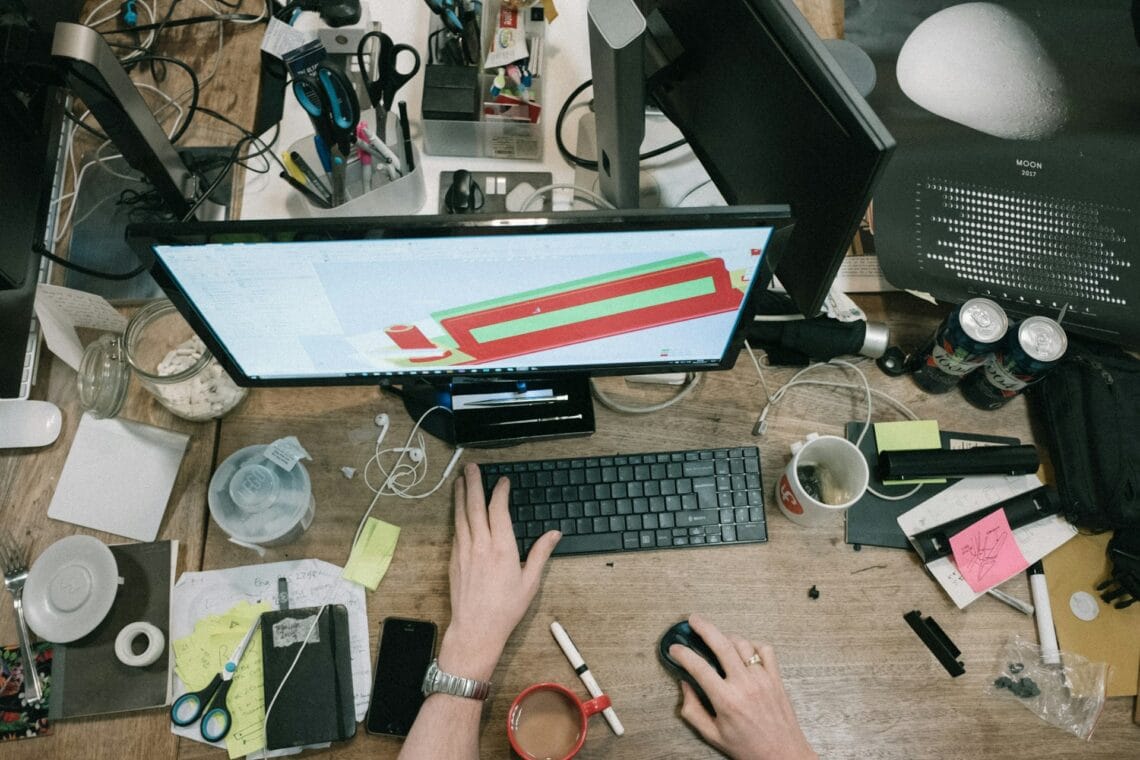
Ever sit down at your work desk at 8.30am, and feel immediately overwhelmed and stressed?
It’s probably because of all the visual clutter!
Each piece of paper, pen, scribbled notes, electronics, and that mass of cords floods your brain with mental tasks. Do I keep it? Do I organize it? Where should it go? Don’t forget to do xyz. Those small, constant decisions add up, leaving you mentally exhausted before your day even begins!
Messy, disorganized environments make it difficult to focus, at home and at the office.
Studies show that cluttered spaces can elevate cortisol levels, the hormone linked to stress. Clutter creates decision fatigue, adding even more to your to-do list.
On the flip side, clearing clutter creates a sense of control and lightness, and even boosts productivity. A clean, organized space allows your mind to relax, focus, and function at its best.
That’s why going on vacation and staying in an Airbnb is so relaxing. It’s not that these places are nicer or much bigger than your home – they are just more minimal and tidy and don’t come with any emotional clutter.
All in all, less stuff = less stress.
If you’re feeling mentally drained, it might not be your to-do list that’s weighing you down – it could be your clutter.
How to Fix Your Clutter Problem
It’s time you take back the power and show that clutter who’s really the boss.
Here are a few tips to banish clutter from your life so that you can save more time and money.
1. Develop mindful spending habits:
Before we start getting rid of things, it’s important to first “stop the bleeding” by focusing on developing mindful spending habits.
Mindful spending is the practice of making sure that all purchases are made thoughtfully and intentionally. This will help to ensure that all new items bought are things that will truly have a positive impact on your life!
2. Tackle one project at a time:
It’s unreasonable to think you can refashion your entire life overnight.
So instead of trying to declutter your whole house in one go, focus on tackling one project at a time. This can help to build some positive momentum and help you avoid getting completely overwhelmed.
Try cleaning just one room per month. Or, even just a section of one room.
Another idea is to organize or get rid of say, 5 items per week. It doesn’t matter the actual number, it only matters that you START and keep going.
3. Sell Your Stuff:
Decluttering your home can be a great opportunity to earn some extra cash!
Instead of just tossing unwanted items in the trash, clean them up and see if you can sell them online. Or, if you have a critical mass of stuff, consider hosting a garage sale.
This can be a great way to get a quick influx of cash to put towards your money goals, like saving up for a vacation or building out your emergency fund.
P.S. If you’ve never sold anything, check out our step-by-step guide on how to sell your stuff!
4. Create Rules and Parameters:
Once your space is clean, put some parameters in place to help you keep it clean!
For example, here are a few rules you could set for your household:
- One-in-one-out rule: For each new item that comes into your house, you have to get rid of an existing item.
- The One-Year rule: If you haven’t used it in a year, you probably don’t need it. Get rid of it!
- Daily decluttering habit: Set aside 15 minutes at the end of each day to tidy up your home before you go to bed. You’ll feel so refreshed waking up in the morning to a clean and organized space.
- Digitize everything (when possible): Receipts, mail, contracts, important letters – As soon as you bring them home, spend 5-10 minutes taking photos or scanning them. File it all digitally in Google Drive or your email folders.
- No Freebies!: Most clutter is taking home stuff that you got given or received for free. Stop taking freebies (unless they truly add value to your life!)
The Bottom Line:
Clutter isn’t just a minor inconvenience. It comes with real costs – financial, mental, and even emotional. Every unnecessary item in your home takes up space in your life, whether you realize it or not.
But the good news? You’re in control. You get to decide what stays and what goes, and each small step toward decluttering creates more freedom and clarity.
Keeping an organized and intentional space means spending more of our non-refundable minutes in life with the people and participating in the activities we love.
So, what’s one thing you can let go of today? Start small, and you might be surprised at just how big of a difference it makes.