


Property taxes are really expensive in many states. I know this pain well, because my rental duplex is located in one of the most expensive counties for property tax – Brazos county, where the assessed tax rate is ~2% of the home’s overall value!
To put this into perspective, my property is worth ~$350k and I’m looking at a $7,000 tax bill (and growing!) every year.
Sometimes tax assessments are fair. But other times (actually, more often than not) owners will receive a tax bill that is unfairly high due to a grossly overestimated property value.
Challenging a tax assessment is a very manual process. I’ve done this before a few times using my county’s crappy online appeals process. It takes time and research to state your case in an attempt (not guaranteed!) to get a corrected valuation of your property.
But last year thankfully I learned about a company called Ownwell. I used them to negotiate my property taxes for me, and was pleasantly surprised by the results!
They lowered my property tax bill by $706! Their fee was 25% of these savings, so my actual net savings was about $530. That’s a huge win for me. And it only took about 20 mins of time to sign up.
Ownwell: Company Overview
A few quick stats and company information:
Ownwell was founded in 2020. Their headquarters is in Austin, Texas.
They specialize in helping property owners lower their tax assessments, ensuring people only pay what’s fair.
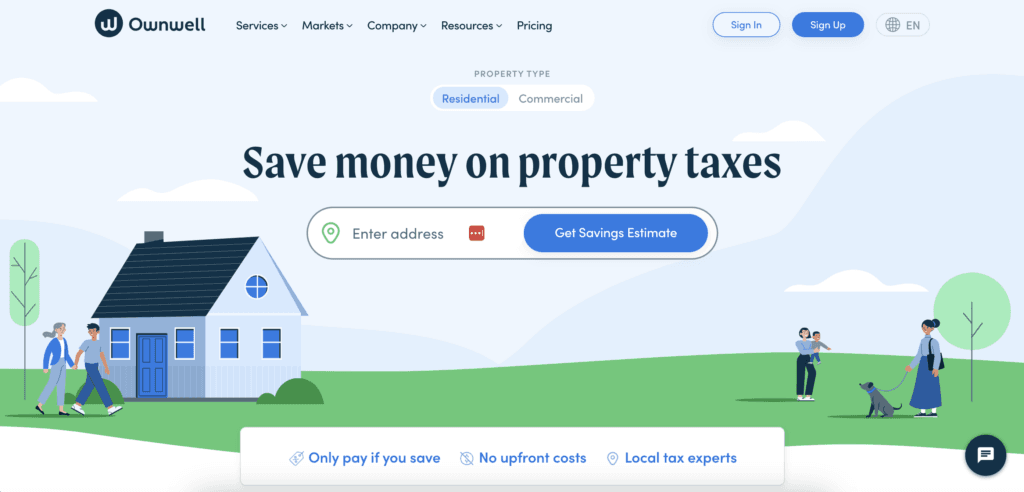
At this time Ownwell offers its services in 7 states: California, Florida, Georgia, Illinois, New York, Texas, and Washington.
Ownwell has a “no risk” pricing model. So they only charge you if they are able to save you money. Their fee is a percentage of the money saved, so their interests are completely aligned with yours! If they’re unable to save you a dime, they won’t charge you anything at all.
How Ownwell Works
It’s a super easy process.
Like I mentioned earlier, it took me about 15 minutes to sign up and fill out my property information.
They did the hard work from there and simply emailed me when the verdict came in.
Here’s an overview of the entire process:
1. First, you sign up (it’s free)
You basically create a profile, and fill out information about the property you own.
If you own multiple properties, you can add each address in and manage everything from the same login.
Some states have publicly available information for real estate. So Ownwell’s system can auto-populate a lot of data without you even having to input it.
2. Provide supporting documents
If you’ve received a tax assessment in the mail, you can upload a copy of it to your profile.
Since Ownwell’s team will be negotiating on your behalf with the county assessor, it’s really important that you share any supporting info about the property that may affect the value of the home.
Any helpful info can save you more money!
Here are the things that you can share:
- Rent roll or P&L Statement (If it’s a rental property)
- Any evidence of damage, deferred maintenance, or issues with the property
- Verification of ownership documents (if requested)
- Any current valuation reports you want to share
The more supporting evidence you can provide Ownwell, the better they can represent you when appealing your tax assessment.
3. Sit and Wait
It takes a while for the experts to do their work.
First, the Ownwell team will review all the information and submit a case to your local county assessor’s office.
You’ll get an email notification when your appeal has been submitted. For me, it happened 2 days after I signed up!
**It’s important to file before the protest deadline! I’ll cover these below for each state!**
Next, the county assessor’s office will respond to Ownwell, and the negotiation begins. There is zero involvement for you at this stage.
Each state and county has a different appeals process and timeline. It can take many months for the entire process to be completed. Be patient!
For me, I filed on May 10th, 2024. And my final verdict didn’t come until September 17th! Here’s a screenshot of my entire timeline.

4. The verdict comes in!
If Ownwell successfully reduces your tax bill, they will send you an email with all the details.
My email came on a random Tuesday morning when I least expected it. I almost spat my coffee out when I learned I’d saved over 700 bucks!
At this point, you’ll also be able to see the updated assessed property value reflected within your appraisal district website.
For me, I received a physical letter in the mail also showing my property’s updated value.
Sadly, not all appeals are successful. So if Ownwell isn’t able to negotiate a reduction, they will simply let you know. There’s no charge if that’s the case!
5. Pay your invoice
Ownwell charges 25% of however much they save you on property taxes.
In my case, Ownwell saved me $706 on my property bill. So they invoiced me $176.57.
The invoice is due within 30 days of you receiving the final verdict – not when your property taxes are due. You can use a credit card or debit card to pay Ownwell their fee.
That’s it!
Pros and Cons of Using Ownwell
I’ve negotiated my property taxes manually before, facing off head to head with my county assessor’s office. It was not fun.
Seriously, Ownwell was such a blessing to find!
Here are some of the main pros and cons to working with Ownwell:
Pros:
- No Upfront Cost: There’s very little risk working with Ownwell because you don’t pay anything until they save you money. It only requires a little bit of time to fill out your profile.
- Time Saving: Ownwell handles all the paperwork and negotiations. You don’t need to collect property comps, write letters or show up to court or anything. They do all the heavy lifting.
- High success rate!: 86% of Ownwell’s customers receive a reduction! And the average savings is $1,102 per property.
- Super Easy Process: They have a modern web-app that is really user friendly.
Cons:
- Limited Availability: Currently, they don’t operate in every state.
- Results May Vary: There’s no guarantee that Ownwell will be successful in the appeal. And the amount you save really depends on your property and local tax assessments.
From my perspective, the pros outweigh the cons. And I’m definitely going to continue to use Ownwell each year.
Tax Appeals – Key Dates
Here are some key dates to watch out for – data via the National Property Tax Group.
**IMPORTANT: You should definitely check your local tax assessors office for their exact tax dates. Each state and county can vary, so the below data is just approximate dates**
| State | Assessed Value Sent | Appeal Deadline |
| California | July 1st | Sep 15th or Nov 30th |
| Florida | August 1st | 25 days after value notices issued |
| Georgia | April – June | May – August |
| Illinois | May – October | 30 days after notices are issued |
| New York | May 1st | Varies by jurisdiction |
| Texas | April – May | 30 days after notices mailed |
| Washington | May – November | 30-60 days after notice |
Who Should Use Ownwell?
Honestly, I think Ownwell is a great fit for anyone who owns real estate within a high property tax state.
Homeowners who receive an unfairly high tax assessment stand to benefit significantly. With little time input, their savings can be massive.
For real estate investors (especially those with multiple properties) Ownwell is a great option to handle all the appeals each year.
Really anyone who wants an easy, no-risk way to reduce their tax burden should give Ownwell a shot.
FAQ’s
A few frequently asked questions about Ownwell and appealing property taxes in general:
1. How much does Ownwell charge for their service?
Ownwell charges a fee only if they successfully reduce your property tax bill. Their fee is 25% of the total tax savings. This means you get to keep 75% of the savings without any upfront cost.
2. What happens if Ownwell doesn’t lower my taxes?
If Ownwell isn’t successful in reducing your tax bill, you don’t owe them anything. It’s a completely risk-free service. Sadly, if you disagree with the verdict, you won’t be able to submit another appeal until the next tax year.
3. How long does the property tax appeal process take?
It could be a few weeks or a few months. It really depends on your county, its process, and workload. There’s no standard answer. The good news is, that most appeals happen far in advance before the tax bills are due. So you still have plenty of time to pay.
4. Can I use Ownwell for multiple properties?
Yep! The more properties you own, the more potential savings. Ownwell is a perfect option for real estate investors or landlords with multiple properties.
5. What are some alternatives to using Ownwell?
Here are a few other ways to appeal your property taxes…
- Hiring a local property tax consultant – Some firms specialize in tax appeals. The downside here is you usually have to pay money upfront, and there’s no guarantee that they’ll reduce your bills.
- DIY tax appeal – You can file an appeal via your local tax assessor’s office. You’ll usually need to justify what you believe your property is worth based on researching comparable properties. You may be able to pay for an appraisal or get comps from a local realtor.
- Other tax appeal services – Companies like Appeal.tax (Illinois) and PropertyTax.io (Texas) offer similar tax reduction services. Pricing and availability vary a fair bit across other platforms.
6. Are there any downsides to appealing property taxes?
For the most part, there is very little risk. In some very rare cases, a reassessment could uncover errors in the valuation which might actually trigger an increase in your property’s taxable value.
If you feel your tax bill is already low, don’t rock the boat by asking for more of a discount!
But if you truly feel your tax assessment is unfair, you should pursue an appeal. There are more potential benefits than downsides.
For example, in some states (like GA), if you are successful in your appeal, the new lower property tax rate is locked in for THREE years. If you used Ownwell, you still only pay their fee of 25% of year 1 savings, making it an even better deal.
The Bottom Line
I’m always looking for ways to pay less tax and keep more money in my pocket. Ownwell helped me big time on that front last year, and I’ll be using them again this year!
Ownwell has a simplified process that takes just minutes to kick off. They do all the work and then charge a percentage fee if and when their work results in a successful appeal.
If you own a home or investment property in one of the states they operate, I highly recommend checking them out.
Related posts:


I hired Ownwell only to file a homestead exemption. Without my consent, they filed a property tax protest—something I never asked for. When I pushed back, they pointed to vague contract language instead of taking responsibility. This kind of overreach is unacceptable. If you value clear communication and consent, look elsewhere.